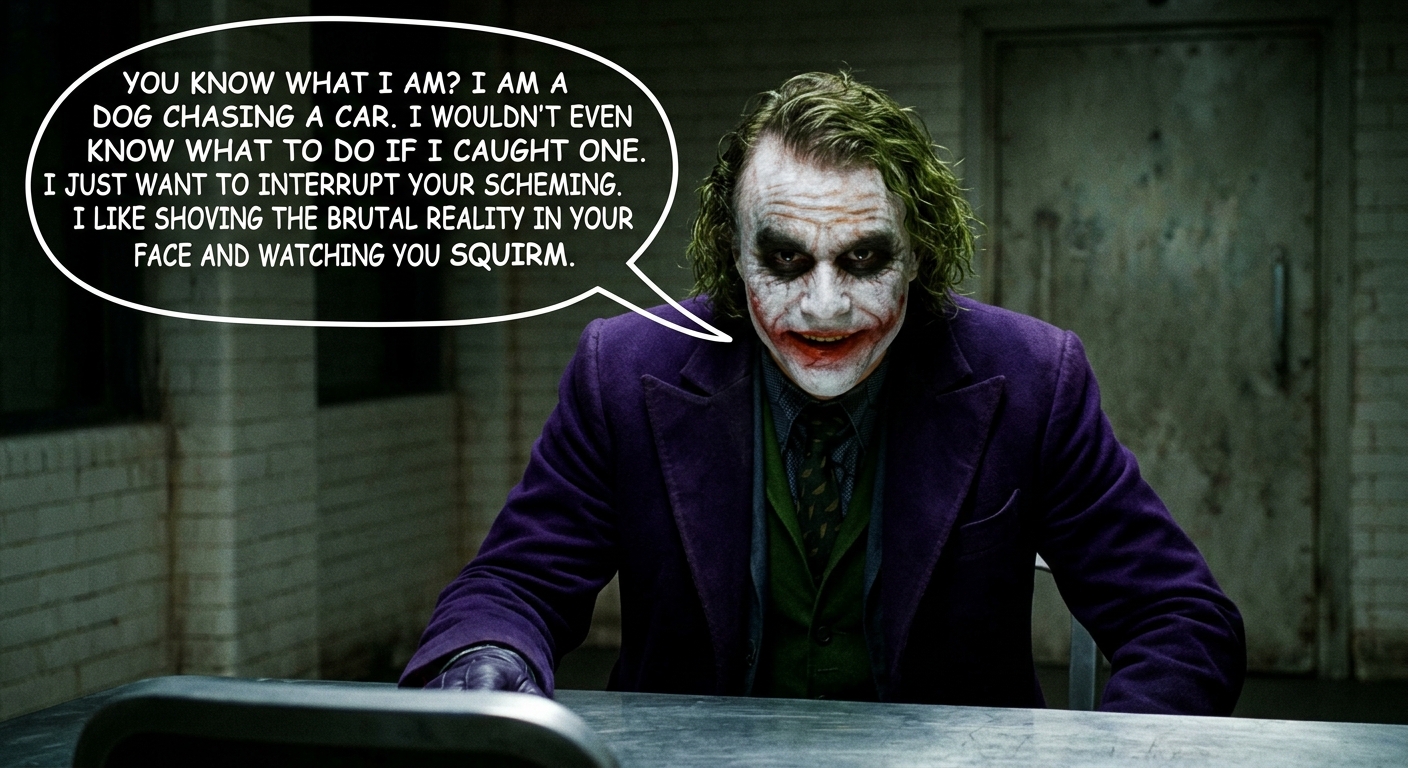
Manuel wrote:
> I now get that you still need the experience, because right now, you are unable to comprehend why it's not
> funny. This will change over time.
>
It's just a movie Manuel,
The irony is that you love to go around pointing the finger of judgement about others and who is evil and who is not.
> I'm out, because I already had that experience.
It's just a bluff, because you don't have friends elsewhere.
Here is the manipulation technique that you use consistently on us. You think that we don't know:
'
-- The Psychology Behind 'The Take Away': Why Scarcity Sells --
The "take away" or "walking away tactics" tap into a fundamental principle of human psychology: the Scarcity Principle. When something appears limited or potentially unavailable, we instinctively value it more highly.
The Power of FOMO in Decision-Making
The fear of missing out (FOMO) is a powerful motivator that operates beneath conscious awareness. When prospects sense they might lose access to your solution, product, or expertise, their perceived value often increases dramatically.
This isn't manipulation—it's hardwired human behavior. Studies in social psychology have consistently shown that people place higher value on opportunities when they believe those opportunities might disappear. This explains everything from the effectiveness of "limited time offers" to the frenzy of Black Friday sales.
More Than Just Manipulation: The Ethics of Scarcity
When implemented ethically, the scarcity principle isn't about creating false urgency. It's about honestly communicating the real limitations of your time, resources, or availability. As consultative selling experts emphasize, this technique works because you're being authentic about your boundaries and the value you provide.
The most successful practitioners of walking away tactics understand that this approach only works when:
You genuinely can walk away (you're not bluffing)
You maintain respect for the prospect throughout the process
You're transparent about your reasons for disengaging
'
Furthermore, nobody actually died in the movie, except Heath Ledger.
It was all just a made up fictional story, that granted may have been based on true stories.
The number of people that you said died in the story did not. They were all just imaginary characters.
Keep a grip on your mind because It was just a fictional story, not a documentary. It wasn't part of an ideology other than showing different situations and the interactions of various characters in entertaining and funny ways.